
AKA Beth Israel-Mikro Kodesh Congregation
Alternate spelling: Mickro Kodesh
Founded 1956
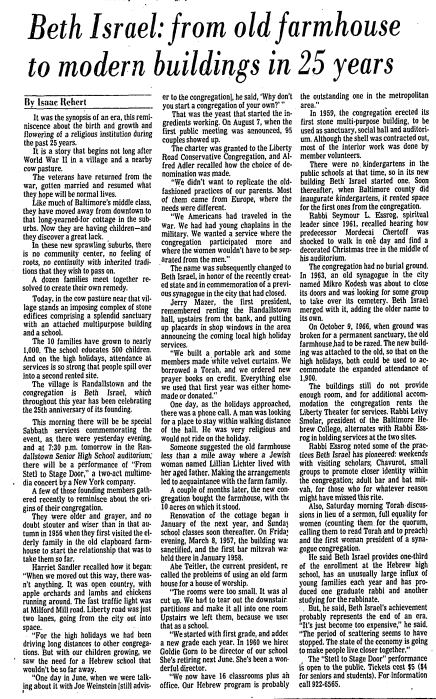
The congregation had previously been named the Liberty Road Conservative Congregation and the Suburban Conservative Congregation until September of its founding year of 1956 when it was named Beth Israel.
Beth Israel was the first congregation outside the beltway (though the beltway was completed in 1962) in the Liberty Road corridor.
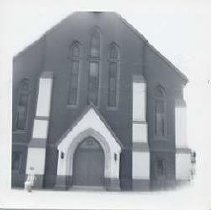
Named for the recently created State of Israel “and in commemoration of a previous synagogue in the city which had closed.” This was Beth Israel of South Broadway.

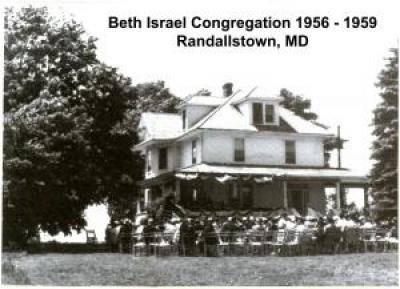
In 1956 a farmhouse on 10 acres of land at 9500 Liberty Road was acquired.
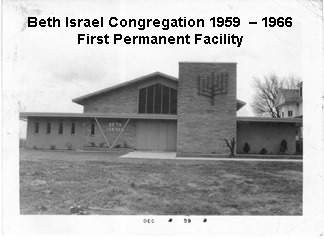
Groundbreaking for a new building at 9500 Liberty Road was held in 1959 and was dedicated on December 11,1959, with Rabbi Mordecai Chertoff presiding. Dr. Louis Kaplan was the guest speaker. The new building was 9000 square feet of space and could seat 800, had “six modern classrooms, a study, a library, and a complete kitchen.”
In August 1963, Beth Israel merged with Mikro Kodesh Congregation (1886) to form Beth Israel-Mikro Kodesh Congregation.
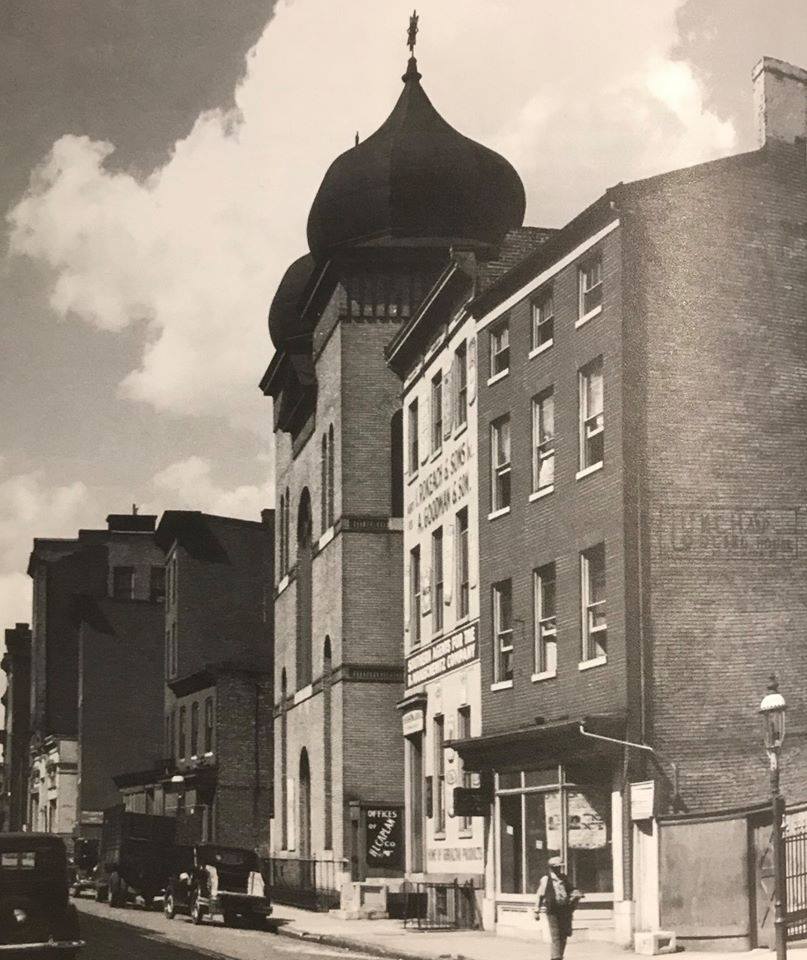

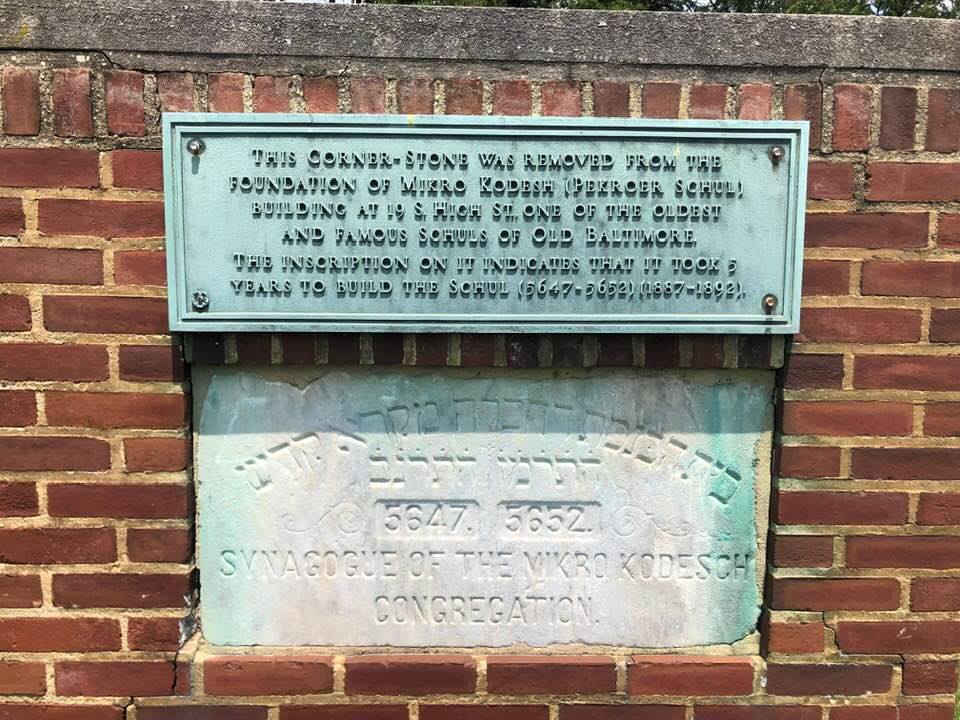
From Fred Shoken: I think the plaque is not correct that it took five years to build the shul. The first date 5647 can correspond to late 1886 when the congregation was founded. The second date 5662 corresponds to the June 1892 date when the cornerstone was laid. The shul was completed and dedicated March 1893. The architect was George Archer.
High Holiday services were held from 1969-1972 in the Randallstown Plaza Theatre in the Plaza Shopping Center in addition to at the synagogue.
A new sanctuary was built at 9411 Liberty Road between 1966 and 1968.

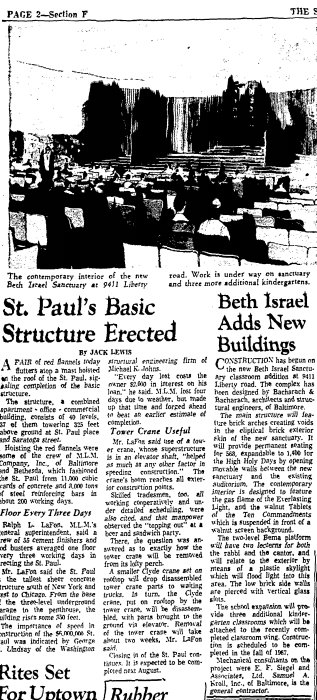
The original cottage was razed in 1967.
When the Har-Brook Hebrew Congregation of Anne Arundel County closed in 1978, its assets were given to Beth Israel.

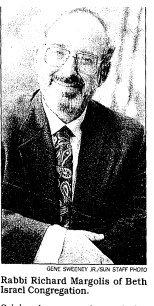
With most of the congregation no longer living in the Randallstown/Liberty Road corridor, Beth Israel-Mikro Kodesh looked to follow many of its families to Owings Mills, and under the leadership of Rabbi Richard Margolis, the congregation bought a $2.7 million office building and plot of land on Crondall Lane off of Owings Mills Boulevard. At the time, Beth Israel-Mikro Kodesh boasted still 750 family members. The new building was and is very close to the Owings Mills Jewish Community Center.
From The Baltimore Sun 8/24/1996:
“Formed 40 years ago by 10 couples from the Liberty Road area, the congregation worshiped for many years in Randallstown. By the late 1980s, many members — especially younger families — began to leave the area.
Many settled in Owings Mills, and within six years Beth Israel’s membership declined from 1,000 families to fewer than 600. Like some other Jewish institutions, Beth Israel followed the families to Owings Mills.
In 1994 the congregation bought an 88,000-square-foot building on 10 acres near the intersection of Owings Mills Boulevard and Crondall Lane for $2.7 million.

The building, which had been used by Catalyst Research Corp. to make batteries for pacemakers and hearing aids, is in the shadow of a business park occupied by companies such as Lever Bros. and across the street from Atlantic Pharmaceutical Services’ future plant.”
Beth Israel Mikro Kodesh moved into its new location at 3706 Crondall Lane, Owings Mills, Maryland 21117 on October 30, 1994.
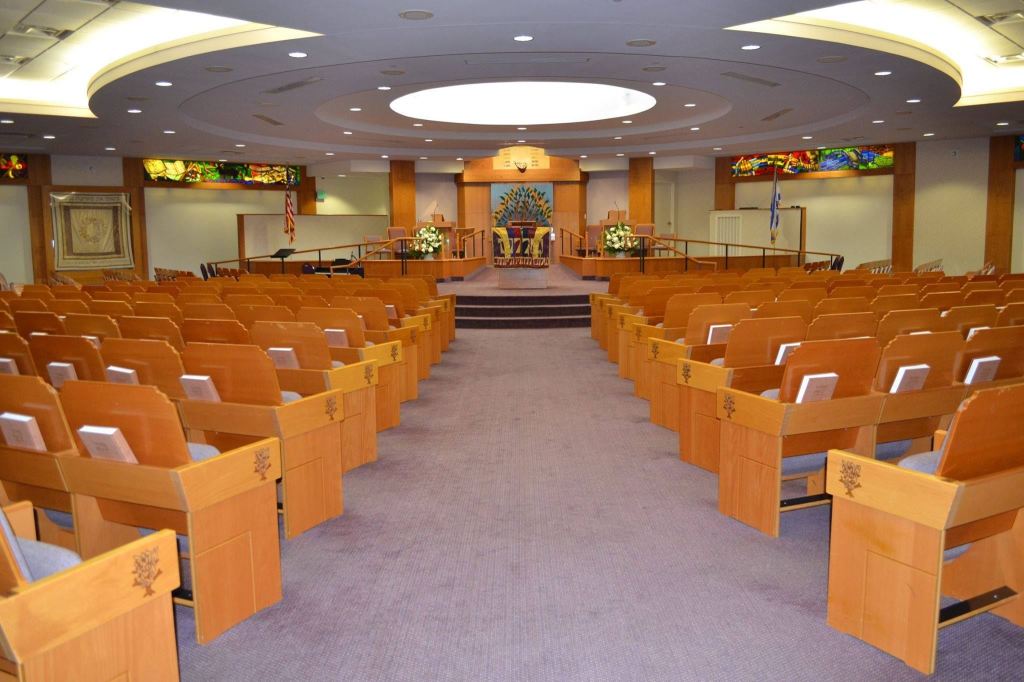
“Meanwhile, Saturday services were conducted in an auditorium at Owings Mills High School. Friday evening services were held in a temporary sanctuary in a dreary area known as “the back 40,” a 40,000-square-foot area in the rear of the building that the congregation hopes to lease.
Expecting large crowds for last autumn’s [1995] holiday services, the congregation temporarily moved to the new sanctuary — still unfinished, with concrete floors. After the holidays, construction resumed, and in February, the congregation began to worship in the new sanctuary. Until this week, they sat on plastic chairs.”
Rabbis:
Rabbi Herbert Ribner, 1956-1958
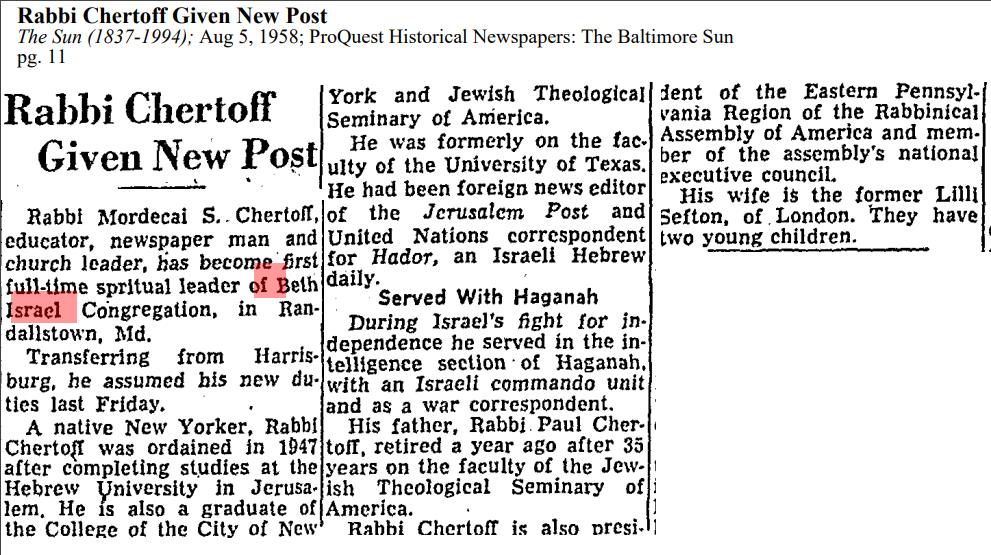
Rabbi Mordecai Chertoff, 1958-1961
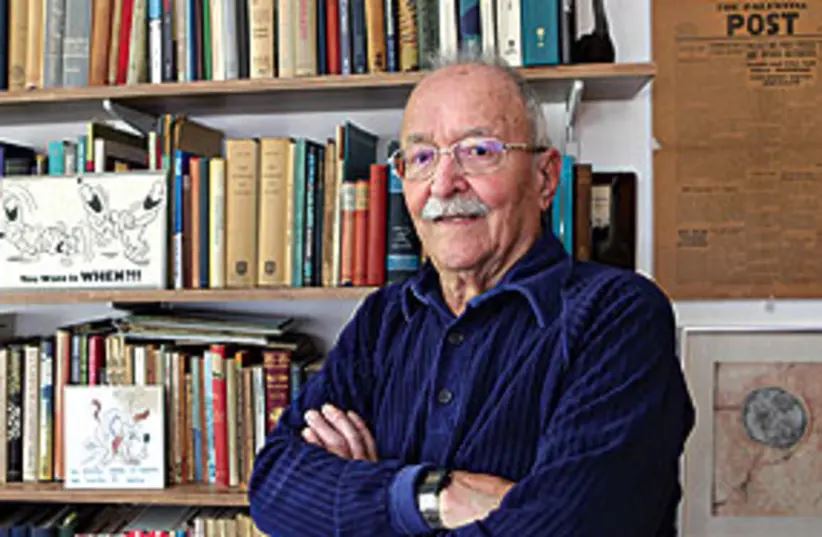
In 1945, at the age of 24, Chertoff took a sabbatical from rabbinical studies at the Jewish Theological Seminary to travel to Palestine.
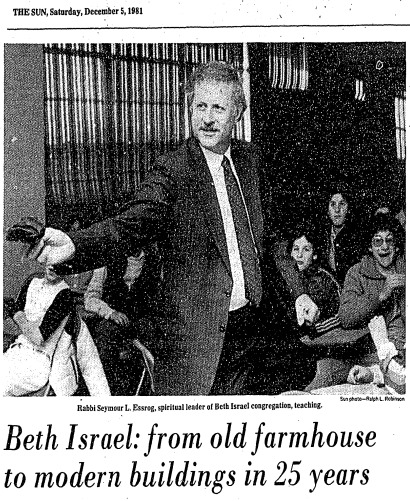
Rabbi Seymour L. Essrog, 1961-1991, died October 18, 2002 at age 68. After leaving Beth Israel Mikro Kodesh in 1991, Rabbi Essrog led B’nai Israel in East Baltimore, Beth Shalom in Taylorsville and Adat Chaim in Reisterstown. Born in Brooklyn, N.Y., he attended Yeshiva Torah VoDaath in New York. He earned his bachelor’s and master’s degrees from Yeshiva University, also in New York. He later received a master’s degree from the Johns Hopkins University. After his 1959 ordination, Rabbi Essrog joined the Army for two years’ active duty as a chaplain and 28 years in the reserves. He retired as a lieutenant colonel.
Rabbi Benjamin N. Goldberg, 1967-1981
Rabbi Richard J. Margolis, 1991-1996
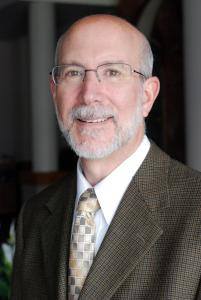
Rabbi Jay R. Goldstein, 1996-current
The congregation also had a large Hebrew school, to be covered in another post.
 Baltimore Jewish History
Leave a comment